
Moss removal from felt roofs: steps, equipment and price 2025
Thatch and moss often go hand in hand, especially on shady or damp sites. Although moss may look harmless, it can deteriorate over time, trapping moisture and shortening the life of the roof. Fortunately, you can get rid of moss - as long as you know what to do.
In this article, we'll go through the most effective and safest ways to remove moss from felt roofs: from home remedies to professional-grade materials, practical tips and cost estimates.
Main takeaways from the article
- Moss takes root in the pores of the felt material and traps moisture, which exposes the roof to constant moisture stress and can lead to leaks, mould or rot damage.
- The most important thing to remember when cleaning is to use gentle tools that are suitable for the roofing material - for example soft brush and water.
- The average cost of removing moss from a thatched roof is about 1500 - 2500 euros.
- The most effective and safest way to remove moss from a felt roof is to use a special moss remover. biodegradable moss removers.
- Regular cleaning and maintenance will help prevent moss growth effectively.

Moss removal from felt roofs -7 key steps
- Check the condition of the roof
- Choose a dry day - moss is easiest to remove in dry weather
- Lightly brush away the moss
- Clean leaves and other loose debris
- Apply moss repellent
- Leave the substance alone
- Check the roof and repeat if necessary
Why should you remove moss from a felt roof?
People often wonder, whether it is worth removing moss, and whether it will harm the roof. Moss should be removed from felt roofs because it deteriorate the condition of the roof and shorten the lifetime. Moss takes root in the pores of the felt material and traps moisture, which exposes the roof to constant moisture stress and can lead to leaks, mould or rot damage. Mikey Hill explains in his article why it is worth removing moss:
"A moss-covered roof can reduce the energy efficiency of your home. Moss traps moisture, which reduces the roof's ability to reflect sunlight and can lead to higher cooling costs during the summer months."
Removing moss improves the appearance of the roof, protects structures and preserves the value of the property.

How to clean a felt roof?
Cleaning the felt roof is an important part of roof maintenance, as it directly affects the lifespan of the roof and the well-being of the whole house. The key to cleaning is to use gentle tools suitable for the roofing material - for example soft brush and blower. As felt is a material that is easily damaged, it is a good idea to do the job with care and caution.
The best time for cleaning is in spring and autumn, when the roof can be inspected for possible damage. Next, we'll go through how to clean a felt roof in practice.
Can I brush my felt roof?
You can brush your felt roof, as long as you do it carefully and with the right tools. The best choice is a very soft-bristled brush that will not damage the delicate felt surface. Brushing should be done gently without applying too much pressure to remove dirt, leaves and moss without damaging the roofing material or seams. Metal brushes and sharp instruments should be avoided altogether, as they can damage the felt surface. Regular and gentle brushing will help to keep the roof in good condition and prevent the accumulation of moss and dirt.
Can a felt roof be pressure washed?
Felt roof not recommended for pressure washing, as a strong water spray can damage the delicate roofing material. The pressure washer can tear the surface layer of the felt, open seams or even peel off bitumen layers, which will reduce the waterproofing of the roof and shorten its lifetime. Pressure washing page a reminder of an important issue:
"If your roof has an extended warranty, you should check the warranty limitations. These limitations often include the use of pressure washers, as they can easily damage the roof."
So if your felt roof needs cleaning, it's best to do it without a pressure washer, for example with the soft brush we mentioned earlier.
How do you get moss off a felt roof?
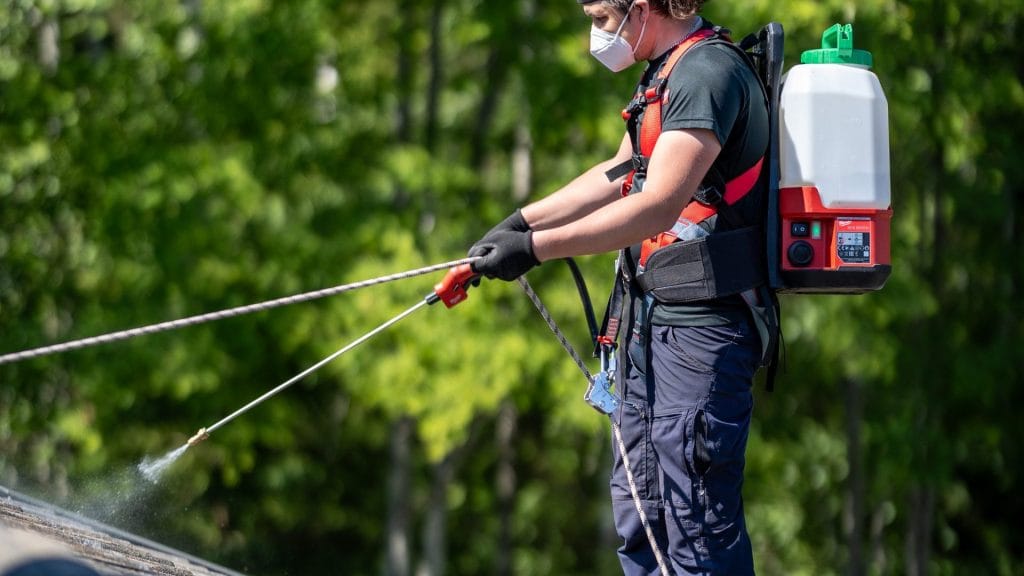
Removing moss from a felt roof should be combined with careful brushing and the use of an anti-moss agent. Me On the gutter.com we recommend biodegradable cleaning products.
There are several ways to remove moss, some of which are easy to find at home and some of which are specifically designed for cleaning roofs. Next, we'll go through two of the most popular methods: natural household remedies such as soda and vinegar, and effective biodegradable cleaners designed specifically for roof surfaces.
Removing moss from felt roofs with soda or vinegar
Natural home remedies, such as baking soda and vinegar, can be used as a lightweight aid to moss removal, especially when the growth is not widespread. Baking soda neutralises acidity and dries out moss, which slows its growth. But as in the previous Article from we wrote: "We at gutter.com have no direct experience of removing moss with vinegar, soda or ash. Instead of these organic moss removers, we always use environmentally friendly moss removers that prevent moss regrowth."
When using natural home remedies, remember that no matter how hard you work, the end result is unlikely to be as effective as with professional products.
Removing moss from felt roofs with biodegradable cleaner
The most effective and safest way to remove moss from a felt roof is to use a special moss remover. biodegradable moss removers. These products are designed to be suitable for roofing materials and will not damage the felt when used as directed. The product is applied to a clean and dry roof, for example with a spray bottle or watering can. The product penetrates into the moss structure and kill it root and branch, when growth ceases and the dead moss is washed away by the rains.
Retrieved from Article from we told you that We On the gutter.com we use a biodegradable cleaner called Benac 50.

What does it cost to remove moss from a roof?
The price of removing moss from a roof varies roof size, shape, amount of moss and selected cleaning method according to. As already mentioned in the previous Article from we said:
"The cost of moss removal from a felt roof varies depending on a few factors, such as the size, condition and location of the roof. In general, moss removal on felt roofs costs around 1500-2500 euros."
However, the article points out that in some cases the price can be as low as €1000 and in others slightly higher than average.
The steepness of the roof, its location and the pricing of the contractor chosen will also affect the price. Doing it yourself can save money, but on steep or high roofs it's best to leave the job to a professional for safety reasons. If the cleaning is also accompanied by a chemical treatment with an anti-moss agent, this will increase the cost by about 100-300 euros.
If you plan to clean the roof and remove moss, contact us us, and we'll look at your situation together on a case-by-case basis.
Why does a felt roof moss?
Felt roofing is prone to moss growth because its rough and porous surface provides a favourable growing environment for moss, especially in shady and damp places. The moss is encouraged to spread by surrounding trees, which shade the roof and drop needles and leaves on it. This debris collects moisture and acts as a nutrient for the moss. In addition, poor ventilation or a steep slope of the roof can slow down the drying of the surface, allowing moisture to remain in the felt and allowing moss to grow and spread even further.
Regular cleaning and maintenance will help prevent moss growth effectively.
Sources
Removing Moss on Roof: A Complete Guide
5 Reasons why you shouldn't pressure wash your roof
Moss on the roof-Poor tips for removal and prevention
 English (UK)
  Suomi
Suomi  Svenska
  Norsk nynorsk